A fake Dom is someone who claims a Dominant identity for control, attention, or manipulation, with no real respect for a submissive's consent or limits. They talk a big game about power exchange, but the moment you ask a real question or push back, the act starts to slip. This guide breaks down the clearest signs of a fake Dom, how a genuine Dominant actually behaves, and where to meet kinksters who walk the walk.
Most kinksters run into this topic the hard way, through a bad chat, a bad date, or a Forum thread that made them go "oh, that happened to me too." You're not the only one asking these questions, and here on FET, our community is a good place to compare notes before you meet anyone new.
What Is a Fake Dom in BDSM?
A fake Dom uses the language of dominance and power exchange without the substance behind it. They might lean hard on titles, rules, and "protocol" right out of the gate, but they skip the parts that actually define good Dominant behavior: clear consent, honest communication, and care for their partner's well-being.
Real dominance is earned through trust, not demanded through a script. A fake Dom often treats "Dominant" as a costume rather than a role built with a partner. What they want is an audience, control for its own sake, or access they haven't earned.
This shows up differently depending on where you meet someone. Online, they might send a wall of "rules" before you've even exchanged names. In person, they might ignore a munch's etiquette or push past a boundary the second nobody's watching. Either way, you're looking at the same tell. They're in it for themselves.
Knowing your own preferences and limits ahead of time makes this kind of behavior much easier to spot. The BDSM Test on FET helps you get clear on what you actually want from a dynamic, so a stranger doesn't get to define them for you.
Why Do Fake Doms Show Up in the Kink Community?
Dominance is one of the most visible roles in kink, and that visibility attracts people who want the image without the responsibility. A few things make this easier to pull off, at least for a while.
Online spaces reward confidence over credentials. Anyone can write "experienced Dominant" in a bio. Without a shared history or mutual friends to vouch for someone, a submissive is often working from vibes alone in the first few messages.
Kink also carries a real vulnerability. Submissives are often taught to defer, to give people the benefit of the doubt, and to avoid seeming "difficult." Bad Doms lean on that. They treat pushback as disrespect and compliance as the price of being taken seriously.
None of this means dominance itself is suspect. Most Dominants on FET are exactly what they say they are: people who take the role seriously and put in real effort to earn a partner's trust. Fake Doms are the exception, but common enough to watch for.
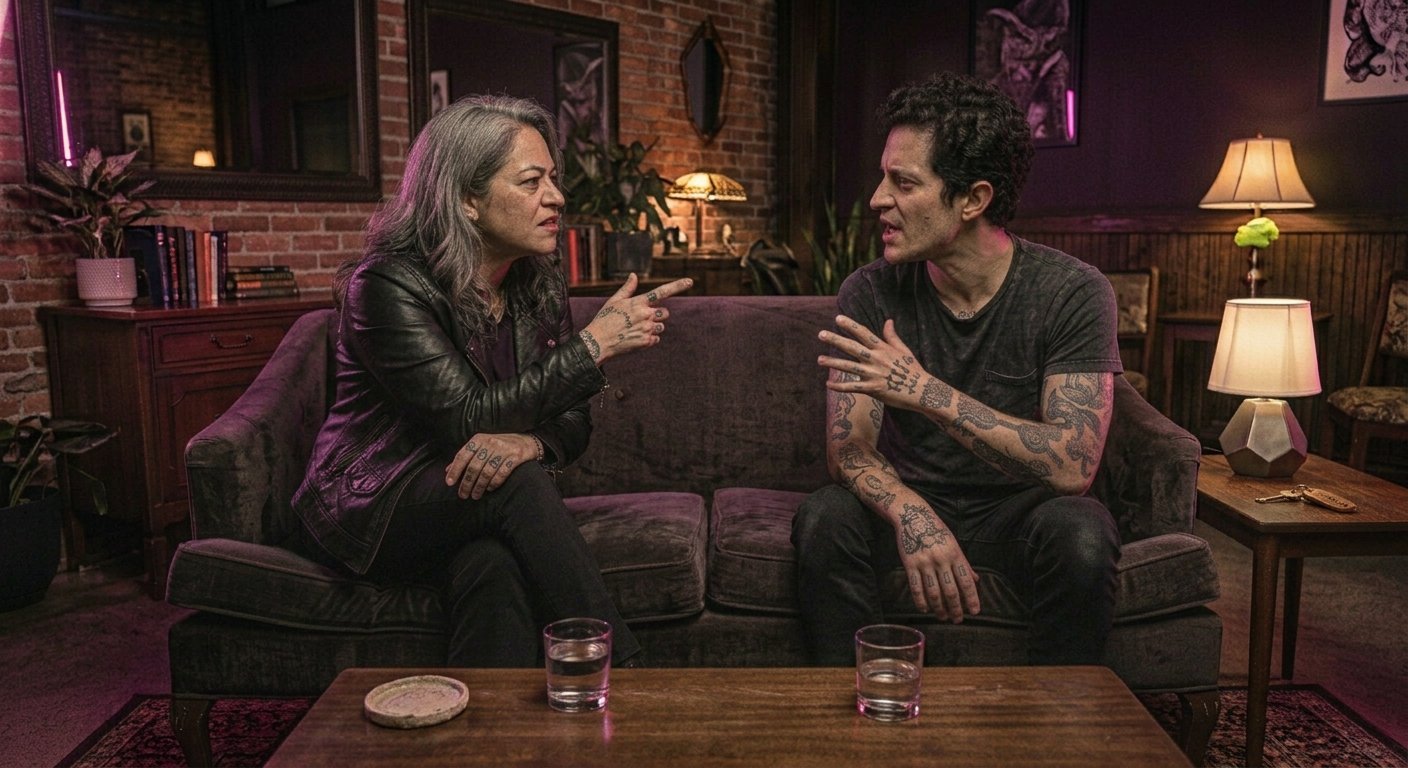
Photo: AI-generated image
What Are the Biggest Fake Dom Red Flags?
Here are the patterns experienced kinksters point to again and again when they talk about spotting one.
Consent Red Flags
- They treat "no" as a negotiation instead of an answer.
- They skip limits and check-ins entirely, or rush through them.
- They push for escalation before you've built any real trust.
- They frame a safeword as something that ruins the mood rather than a limit you can call at any time.
- They act offended when you ask basic questions about their experience or intentions.
Communication Red Flags
- They avoid direct answers about their experience, references, or how they usually play.
- They talk in absolutes: "A real submissive would never ask that."
- They shut down conversations about aftercare, boundaries, or expectations.
- They contradict themselves between what they say publicly and what they say in private messages.
Reyna, 29, a submissive on FET, ran into this early on: "He had a whole list of rules before we'd even had a phone call. No questions about my limits, no interest in what I wanted. It felt less like dominance and more like a script he'd used on ten other people."
Behavior Red Flags
- They demand obedience before you've agreed to any dynamic together.
- They isolate you from friends, other kinksters, or the wider community.
- They use guilt, jealousy, or shame to keep you compliant.
- They disappear or turn cold the moment you assert a boundary.
- They never mention aftercare, or treat it as optional for you but required for them.
Aftercare keeps coming up in these stories. As Marcus, 41, a switch on FET, puts it: "The biggest tell for me is aftercare. A real Dom checks in after a scene because they actually care. A fake one either skips it or expects me to take care of him instead."
Online Profile Red Flags
- A profile packed with rules and demands, but almost nothing about who they actually are.
- Photos or claims that feel copied, generic, or impossible to verify.
- A push to move off FET and onto private messaging apps within minutes of matching.
- Zero interest in your interests, limits, or experience level, but plenty to say about theirs.
If two or three of these show up together, take it seriously. Slow down, and talk it through in the FET Forum, where other kinksters have almost certainly seen the same pattern.
Real Dominant vs. Fake Dom at a Glance
|
Signal |
Real Dominant |
Fake Dom |
|
Approach to consent |
Asks, listens, and adjusts before and during a scene |
Assumes, pressures, or skips the conversation |
|
Response to "no" |
Respects it immediately, no argument |
Pushes back, sulks, or tries again later |
|
Communication style |
Direct, patient, open to questions |
Vague, defensive, or full of ultimatums |
|
Aftercare |
Plans for it and checks in afterward |
Ignores it or treats it as your job, not theirs |
|
Reaction to boundaries |
Sees them as useful information |
Treats them as a personal insult |
Dominance reads better as a real conversation than a checklist. Our piece on what makes a perfect Dominant goes deeper into what good dominance actually looks like day to day.
How Do You Protect Yourself from a Fake Dom?
Most of your protection comes from what you bring to the conversation. Dee, 35, a submissive on FET, builds it straight into how she meets people: "I always ask new people how they handle a hard limit. The real ones slow down and talk it through. The fake ones get defensive fast, like the question itself was an attack." Five habits do most of the work:
- Get clear on your own limits first. The BDSM Test on FET shows which roles and areas of BDSM you lean toward, so a limit is easier to name.
- Ask them directly, and early. How do they handle a hard limit? What does their aftercare look like? Their reaction to que question tells you more than the answer does.
- Control the pace. A real Dominant will match yours. A fake one will push you past it and call that dominance.
- Start in low-stakes conversation. BDSM Chat lets you get a feel for someone with nothing riding on it.
- Trust the discomfort. If a conversation feels off, it usually is. You don't owe anyone an explanation for walking away.

Photo: AI-generated image
How Do You Vet a Dom Before You Meet?
Those questions tell you how someone handles being asked. Vetting tells you what other people already know about them. It's standard practice in kink, and anyone worth your time will expect it. Here are the five steps most experienced kinksters run through:
- Check their history in the community. How long have they been around? Do they turn up at munches, in groups, on the FET Forum? Someone with a real presence has people who can speak to how they behave, and someone with no footprint at all is worth a few extra questions.
- Ask for references. That means names of past partners you can message yourself. A Dominant who plays regularly and treats people well will have people happy to vouch for them. Getting mocked for asking, or told that references are "disrespectful," answers the question on its own.
- Talk to those references. Ask specific things. Did they respect your limits? What happened when you used a safeword? Would you play with them again?
- Meet in public first, with no play on the table. A munch or a coffee shop works. Watch how they treat the staff, the venue, and everyone else in the room.
- Set up a safe call. Tell a friend where you're going, who you're meeting, and when you'll check in, and agree on what happens if you don't. Plenty of experienced Dominants will suggest one before you get the chance.
If a name keeps coming up and you still can't get a read on it, ask around in the FET Forum.
Ready to Meet the Real Ones on FET?
"Dominant" covers a lot of ground, and the ones who take it seriously tend to be specific about what they offer. Browsing by role is the fastest way to see who's actually out there.
- Dominant dates if you're still working out what kind of dynamic fits you
- Master dates and Mistress dates for structured, ongoing power exchange
- Owner dates for pet play and total power exchange
- Sadist dates for impact, pain play, and heavy sensation
- Rigger dates for rope, shibari, and suspension
- Pro-Dom/me sessions if you want someone with experience behind them
Every one of them has a profile you can read, questions you can ask, and a community that you can check with. Sign up for free and start where you are.

FAQ: Fake Doms in BDSM
How do I know if a Dom is fake?
Watch how they handle consent, boundaries, and "no." A real Dominant listens and adjusts. A fake one pushes, argues, or disappears the moment you set a limit.
What's the difference between a fake Dom and a bad Dom?
A bad Dom means well but hasn't built the skills yet. They might be new, careless, or clumsy at communicating, and they'll usually own it and adjust once you raise it. A fake Dom is using the title as cover for what they wanted anyway, so raising the same problem gets you defensiveness or punishment instead of a fix. The tell is what happens after you speak up.
Are all Dominants who ask for obedience fake?
No. Structure and protocol are normal parts of many D/s dynamics. The difference is consent: a real Dominant builds that structure with you, while a fake one demands it before you've agreed to anything.
Can a fake Dom be a woman or a Dominatrix?
Yes. "Fake Dom" describes behavior, not a specific role or gender. Anyone can borrow Dominant or Dominatrix language without the consent and communication that make it real.
What should I do if I think I'm dealing with a fake Dom?
Slow down, ask direct questions, and trust your read on the conversation. Talking it through in the FET Forum can also help you see the pattern clearly.
YOU MAY ALSO LIKE
Similar discussions
-
- 26 replies
- 99 views
-

- Lo****
-
- 21 replies
- 409 views
-
- Deleted Member
-
- 38 replies
- 1,370 views
-

- 30****
-
"Não Ignore Estes Alertas: Sua Moralidade Pode Estar Comprometida"
By do**** , in 🇪🇸Foro sobre Fetiches y BDSM en Español
- 0 replies
- 784 views
-

- do****
-
- 3 replies
- 846 views
-

- Ae****
Join the conversation
You can post now and register later. If you have an account, sign in now to post with your account.
There are no comments to display.