Ever spotted "K-9 roleplay" on a Kinky Ad and wondered what's actually going on behind that leash? You're not alone. This corner of kink mixes obedience, instinct, and trust into a dynamic that looks simple from the outside but runs deep once you're in it.
K-9 roleplay is a form of pet play where one partner takes on the role of a dog (the pup) while the other acts as handler or owner, guiding behavior through commands, gear, and rewards. It's built on the same foundation as any BDSM dynamic: consent, communication, and a clear sense of who's holding the leash.
Ready to dig into what makes dog play tick? Let's get into it.
What is K-9 roleplay, exactly?
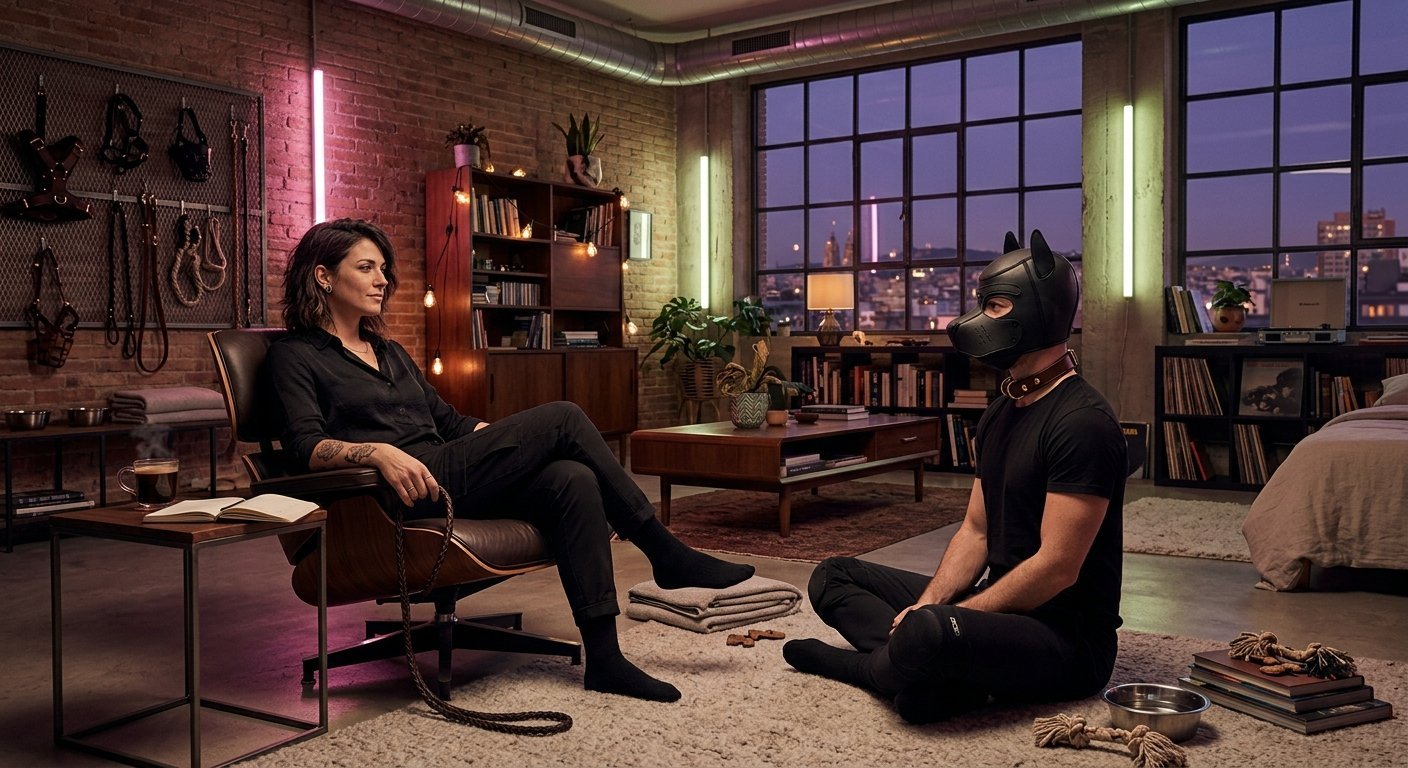
This dynamic sits inside the wider world of pet play, but it has its own flavor. While pet play can cover kittens, ponies, or any animal a person feels drawn to, K-9 roleplay focuses specifically on dog behavior: crawling on all fours, wearing a collar, responding to commands, and finding comfort in a clear hierarchy.
The pup often drops into a headspace that feels playful, loyal, and free from the pressure of adult decision-making. The handler steps into a role that's part trainer, part caretaker, and part Dominant.
We asked a few FET members to explain what actually pulls them into this dynamic. Marcus, a 34-year-old sub who's been playing pup for six years, describes it like this: "Being a pup lets me switch my brain off completely. I don't have to plan anything or make choices. I just follow my handler, and it's the most relaxed I ever feel." That kind of relief is exactly why so many kinksters keep coming back to dog play.
If you've read our guide to BDSM puppy play, you already know the basics overlap. This style just leans harder into obedience training and pack mentality.
The power dynamic behind dog play
Every scene runs on a power exchange. The handler sets rules. The pup follows them, tests them, and earns rewards for good behavior. That structure is the whole point.
A few things shape the dynamic:
- Commands and cues. Simple words or hand signals tell the pup what to do, from "sit" to "heel."
- Rewards and corrections. Treats, praise, or playtime reinforce good behavior. Corrections stay firm but never cruel.
- Roles beyond the pup and handler. Some scenes include a "pack," where multiple pups play together under one handler.
- Headspace. Many pups describe dropping into "pup space," a mental state similar to subspace, where thinking quiets down and instinct takes over.
Dana, a 41-year-old handler, puts it this way: "Handling is about reading my pup's energy just as much as giving commands. When he's tired, we slow down. When he's wound up, we play fetch in the backyard until he settles. We build the scene together." That back-and-forth is what separates real dog kink from a costume.
Not everyone picks one side and stays there. Plenty of players switch between handler and pup depending on the partner or the mood, and some couples trade roles from one scene to the next. There's no rule saying a handler has to stay a handler forever. What matters is that both people know which hat they're wearing before the scene starts.
Common gear and roles in K-9 roleplay
If you're new to this scene, gear can look intimidating at first. Here's what typically shows up:
- Collars and leashes to mark the pup's role and give the handler physical control
- Hoods or masks shaped like dog faces, used by pups who want full immersion
- Kneepads for comfort during long stretches on all fours (skip these your first time, and your knees will absolutely let you know the next morning)
- Tails worn as a plug or attachment for visual and sensory effect
- Bowls and toys that reinforce the pet dynamic outside of formal scenes
None of this gear is required to get started. Theo, a 27-year-old pup, started small: "I began with just a collar because gear felt overwhelming. Two years later, I have a full hood and tail, and my confidence in the scene grew right alongside my kit." Some pups play with nothing more than a collar and a mindset. Others build a full kit over the years. Both approaches count.
K-9 roleplay vs. puppy play vs. general pet play
These terms get used interchangeably, but they're not identical. Here's how they stack up.
|
Term |
Focus |
Typical Roles |
Headspace Depth |
|
K-9 Roleplay |
Dog-specific obedience and pack dynamics |
Handler, pup, pack members |
Often deep, training-focused |
|
Puppy Play |
Playful, younger dog energy; less formal training |
Handler, pup |
Light to moderate |
|
General Pet Play |
Any animal a person connects with (cat, pony, etc.) |
Owner, pet |
Varies widely by the animal chosen |
If dog play doesn't quite fit, our piece on what kind of animal are you can help you find the pet persona that suits you best.
Getting started safely
Dog play looks physical, but the groundwork happens with words. Before any scene, talk through:
- Roles. Decide who's handler and who's pup, and whether a pack dynamic is on the table.
- Limits. Cover physical limits (joints, breathing with hoods) and emotional ones (aftercare needs).
- Signals. Agree on a way for the pup to communicate if something feels wrong, since pups often don't talk mid-scene.
- Duration. Set a rough time frame, especially for beginners still building stamina on all fours.
- Aftercare. Plan how you'll transition the pup back to their regular headspace once the scene ends.
Zoe, a 30-year-old pup who mixes dog play with pack dynamics, learned this one the hard way: "Early on, I'd end a scene and just stop, no water, no cooldown, nothing. I felt awful for days. Now, aftercare is non-negotiable, and it's made every scene since so much better." A few minutes of care at the end can save a rough week later.
Establishing these ground rules matters in any power exchange, and our guide to BDSM relationships 101 walks through how to set them up early. If you're drawn to the headspace side of things, our breakdown of topspace and subspace explains why that mental shift feels so powerful. And if animal roleplay in general appeals to you, check out our guide to pony play training for a related dynamic with its own gear and rules.
Where to find your pack in real life
A lot of pups and handlers start online, but plenty of the fun happens in person. Local munches often have a pup-friendly crowd, and some cities host dedicated pup meets where you can crawl, socialize, and compare gear without any pressure to perform. Dungeons and play parties sometimes set aside floor space for pups too, so it's worth asking ahead if that's part of the lineup.
If you can't find a local group yet, that's exactly what online communities are for. Posting in the Forum or asking around in Live Chat is a fast way to find out who's already running pup meets near you, even if nobody's built a public event page yet.
Ready to find your pack?
This kind of play works best with a partner who respects your pace and your limits. FET is built for exactly that kind of connection.
- Not sure where you land on the kink spectrum? Take the BDSM Test and see what fits.
- Want to talk it through first? Head to BDSM Chat and ask questions before you commit to a scene.
- Ready to meet handlers and pups near you? Visit Fetish.com and start browsing profiles today.
Keep it kinky. Keep it consensual. Keep it FET.
FAQ
Is K-9 roleplay only for gay men?
No. This dynamic shows up across every gender and orientation. It's a power exchange built around headspace and trust, and anyone can find their place in it.
Do I need expensive gear to try dog play?
Not at all. A basic collar is enough to start. Hoods, tails, and kneepads can come later if you decide you want them.
What's the difference between pup space and subspace?
Pup space is a specific flavor of subspace centered on instinct and playfulness rather than formal submission. Many pups describe it as lighter and more energetic.
Can this happen without sex?
Yes. Plenty of handlers and pups keep their dynamic entirely non-sexual, focused on obedience, play, and companionship.
How do I find a handler or pup near me?
Browse profiles and Kinky Ads on Fetish.com, filter by interest, and start a conversation in Live Chat to see if your dynamics line up.
Can I switch between being a handler and a pup?
Yes. Many players enjoy both sides depending on their partner or mood. Just make sure everyone involved knows which role you're playing before the scene starts.
Is it normal to feel emotional after a scene?
Yes. Dropping out of pup space can bring on a wave of emotion, tiredness, or even sadness once the scene ends. That's exactly what aftercare is for, so build time for it into every session.
YOU MAY ALSO LIKE
Similar discussions
-
- 17 replies
- 59 views
-

- BlueGrace
-
- 0 replies
- 27 views
-

- Da****
-
Inside My Household as a Strict Dominant: Why Putting the Food Shopping Away Is About More Than Just Food
By HierarchySociety , in New to BDSM, Kink & Fetish?
- 24 replies
- 69 views
-
- 7 replies
- 58 views
-

- Ma****
-
- 9 replies
- 42 views
-

- Sl****

Join the conversation
You can post now and register later. If you have an account, sign in now to post with your account.
There are no comments to display.