From 1,000 to 11,500 followers in twelve months — FET's Instagram education series on BDSM grew not through virality, but by being genuinely useful when it mattered most.
For many women, curiosity about kink starts quietly. It shows up in a saved post, a late-night scroll, or a question that still feels too awkward to ask out loud. Before anyone steps into a scene or names a dynamic, they often need something simpler: language for boundaries, a clearer sense of what is healthy, and a way to tell curiosity from pressure.
That was the gap Knk Explained set out to fill.
Over the past year, FET — voted Best Fetish App/Website at the UK Fetish Awards — used Instagram to turn common questions about BDSM into practical, shame-free education. We covered consent, aftercare, power dynamics, roles, terminology, red flags, and beginner guidance. Some posts tackled the basics. Others answered the questions people often search for in private: how to spot a fake Dom, how to be a good brat, what happens when a BDSM relationship ends, and how to play in front of a partner when you feel shy.
The series needed to do more than explain vocabulary. It needed to be useful, grounded in safe, sane, and consensual practice. The kind of guidance you can act on: how to name a boundary, when to slow down, what trust looks like, and which behaviours should set off alarms.
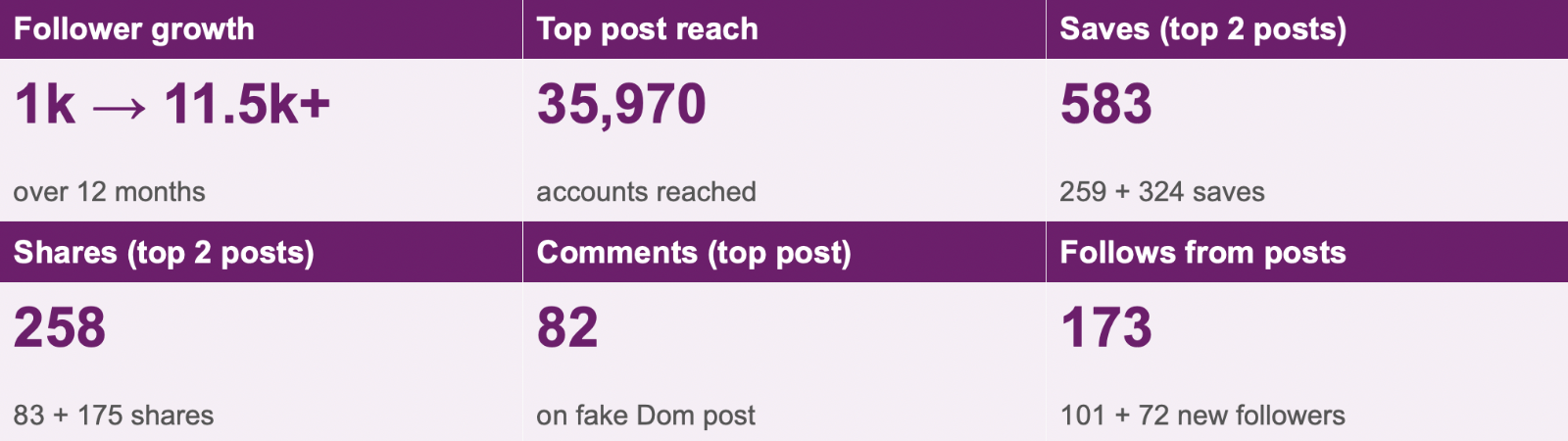
Campaign At a Glance
The Challenge of Doing it Well
Instagram is not an easy place for nuanced education. Careful guidance gets sanitised into vagueness or buried beneath louder content. On a platform that rewards certainty and emotion, a series built around "it depends" and "trust takes time" faces a structural disadvantage. The challenge was to make the material accessible enough for Instagram without stripping out the substance that made it worth posting. Knk Explained chose usefulness over reach, and the audience found it anyway.
The Numbers, and What They Mean
From March 2025 to March 2026, our Instagram account grew from roughly 1,000 followers to more than 11,500. But the clearest measure of impact was not growth; it was how people used the posts.
Our post on how to spot a fake Dom reached 35,970 accounts and generated 259 saves, 83 shares, 82 comments, and 101 new follows. Our post on how to be a good brat reached 25,336 accounts and brought in 324 saves, 175 shares, 41 comments, and 72 follows. Those figures point to something more than passing attention. People save what they expect to return to. They share what they think someone else needs to read.
Saves and shares are the metrics that matter most for a series like this; they tell you whether a post has moved from entertainment into utility. Across Knk Explained, posts on aftercare, submissive identity, BDSM breakups, and terminology consistently drew both. The strongest posts were rarely the loudest. They were the most usable.
"I appreciate this post very much. Not said enough."
— comment on the Spotting a Fake Dom post
A Community That Built Itself in the Comments
The comment thread on the fake Dom post told a story the reach figures couldn't. People kept returning to the same point: trust takes time, rushing is a red flag, and submission cannot be demanded. One commenter wrote simply, "I appreciate this post very much. Not said enough." Another put it more directly: "The rushing is always a dead giveaway. Earning trust takes time."
Those responses showed the post had gone beyond explanation. It gave people language for instincts they already had but hadn't fully named, and opened the door for others to share their own experience, which made the post more useful for the next person who found it. The comments became part of the resource.

Why it Mattered
For many people entering BDSM spaces, the first barriers are not desire or openness. They are access, trust, and clarity. Who can I trust? What does a red flag look like in practice? How do I talk about what I want without feeling inexperienced or judged? Those are foundational questions, and they come up early, before someone has had a single experience, when they are still forming a sense of what they want and what they won't accept.
Knk Explained met those questions where they were already showing up: on social media, in a familiar format, at the point where curiosity often feels most tentative. It offered a starting point that was beginner-friendly without being patronising, and direct without becoming shock content.
After a year, the most convincing measure of success was evidence of use. People returned to posts, saved them, shared them with partners and friends, and added their own experience in the comments. Over time, Knk Explained became part of how a growing community learned.
That remains the point. At FET, we want to make kink easier to approach, clearer to talk about, and less isolating to learn. The response showed there is real demand for it. There is still more work to do.
YOU MAY ALSO LIKE
Similar discussions
-
- 14 replies
- 118 views
-

- Th****
-
- 0 replies
- 204 views
-

- Se****
-
- 9 replies
- 266 views
-

- Li****
-
- 6 replies
- 581 views
-

- My****
-
- 14 replies
- 1,117 views
-

- Deleted Member
Join the conversation
You can post now and register later. If you have an account, sign in now to post with your account.
There are no comments to display.