Ever thought about handing over control and letting rope decide how you move, pause, or stay still for a while? For some people, it‘s the quiet focus that draws them in — the moment when your body is held and outside noise drops away.
Rope play is about presence, trust, and sensation. A rope bunny brings curiosity, body awareness, and clear communication to the scene.
Rope can press, support, or restrict, and for plenty of kinksters, that combination is both grounding and seriously intense.
Taking on the role of rope bunny means showing up, staying connected, tuning into what you feel, and sharing that with your partner.
What Is a Rope Bunny, Really?
A rope bunny is anyone who gets a kick out of being tied up in consensual rope bondage. It’s not just about the knots; it’s about the whole vibe between the person tying and the person getting tied. Think stillness, anticipation, playful teasing, or dropping deep into a meditative zone. No two rope scenes look the same. Some feel light and exploratory, while others lean into intensity or unfamiliar sensations.
Rope bunnies aren’t passive, either. They communicate, set boundaries, and stay tuned in to what their body’s telling them. The rigger handles the rope; the bunny handles their own comfort, safety, and signals. Both roles are essential, and both shape the scene in real time.
For a lot of bunnies, the appeal lies in collaboration. Rope play is about building trust, pushing limits, and co-creating something unique, every single time.
If you want to explore rope dynamics further, FET’s rope bondage space offers a solid starting point:
➡️ Curious to connect with riggers or fellow rope bunnies?

Vulnerability, Control, and the Edge of Trust
Rope might look beautiful, but its impact is mostly internal. Being tied up means choosing to hand over control and trusting a partner to notice your breath, posture, and reactions. For many rope bunnies, that deliberate surrender is the core appeal.
A scene might be all about restricted movement, a certain pose, staying still, or just sinking into the quiet together, sometimes without a single extra touch. For some, rope is pure calm. For others, it brings out raw emotions or leaves you feeling open and exposed. When aftercare is missing, an emotional drop can follow.
It all ties back to the big themes: power, control, trust, and the headspace that can come with vulnerability.
TPE, Agreements, and Long-Term Rope Dynamics
Rope doesn’t always stop when the knots come off. For some kinksters, rope is woven into everyday life. It could be as part of Total Power Exchange (TPE), set routines, or long-term roles that go way past a single session.
These setups are built on deep conversations, clear agreements, and sometimes even written contracts. You might decide together:
- When and how rope play happens
- Who gets to start a scene
- What the absolute limits and boundaries are
- How aftercare is handled, physically and emotionally
These arrangements require experience, honesty, and a high level of trust. For many rope lovers, that depth is part of the draw. Structure here isn’t about rigid rules; it supports safety, intensity, and real connection that lasts.
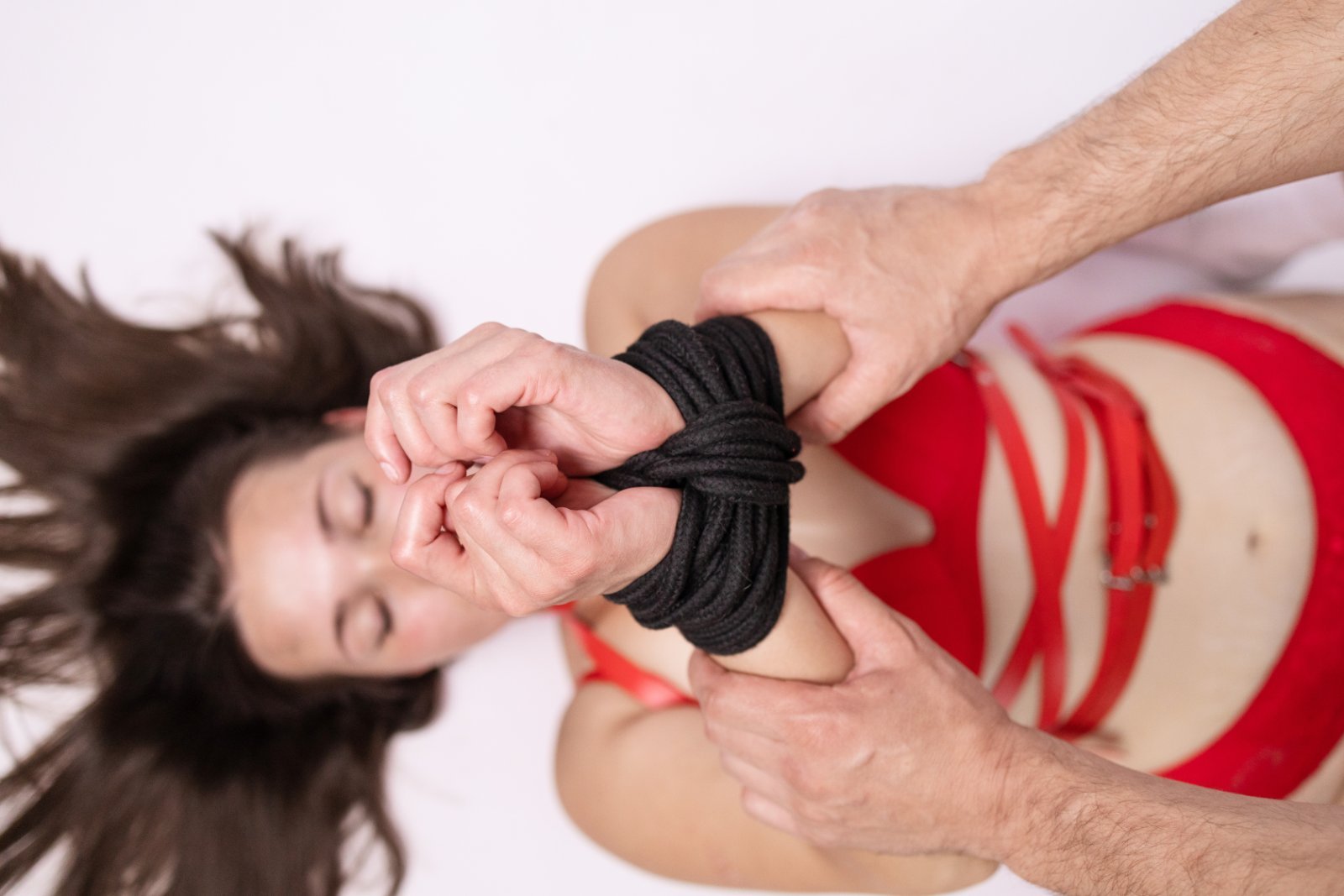
Photo: Envato Elements
Why It Resonates
Surrender: Choosing to be tied is a way to give up control temporarily, with consent and intention.
Focus: Rope can pull attention fully into the body and the present moment. Distractions tend to fall away.
Connection: Rope functions as a form of communication, with meaning carried through tension, pressure, and breath.
Trust: Allowing someone responsibility for your comfort and safety while restrained builds closeness that develops through care, not performance.
Rope often leaves an impression that goes beyond the physical.
Rope Gear That Shapes the Scene
You don’t need a fancy kit to get started, but the tools you use can totally change the vibe.
- Rope: The material, thickness, and texture set the mood — silky, rough, snug, or stretchy, every detail matters.
- Safety tools: Shears or cutters should always be within reach.
- Support props: Mats, pillows, or sturdy furniture can make longer scenes more comfortable and keep your body happy.
- Clothing or nudity: This is a personal choice and works best when it is intentional rather than assumed.
Every bit you bring in adds a twist to your rope play.
Rope Scenes and What They Can Look Like
Rope can take so many forms. Here are just a few flavors you might see:
- Practice ties: No drama, just hands-on learning and skill-building.
- Meditative scenes: Slow holds, barely any movement, and that deep, quiet focus.
- Power play: Rope used to highlight control, hierarchy, or submission.
- Performance: Visual scenes or structured tie sessions for an audience (or just for fun).
No single scene is required. The best rope play matches the people involved, not some checklist. Want inspiration or advice? Jump into the FET Forum and chat with kinksters who’ve seen (and tied) it all.
None of these are mandatory. Rope scenes should fit the people involved, not a checklist.
➡️ Want to talk rope with people who get it?

How to Talk About Being a Rope Bunny
Sharing interest in rope bondage can feel vulnerable. Some people prefer direct conversations, while others ease in through shared reading or attending workshops together.
What actually helps?
- Being up-front about your curiosity
- Making space for questions (and maybe a few nerves)
- Accepting that it’s not everyone’s kink, and that’s okay
Rope play only works when both people are genuinely into it.
Genuine enthusiasm on both sides matters more than experience.
Does Being a Rope Bunny Always Mean Sex?
Nope. Some rope scenes get steamy, but plenty are all about sensation, trust, or deep focus, not sex. For many bunnies, the charge comes from restraint and connection, not what happens between the sheets. There’s no one right way to do it.
Real Talk: Risk, Responsibility, and Looking After Each Other
Rope play comes with real risks. Tied-up bodies mean limited movement, nerve pressure, emotional highs, and sometimes a trippy headspace. This means you’ve got to prep and stay aware.
What keeps things safe?
- Clear negotiation up front
- Active, ongoing check-ins during play
- Agreed signals or safewords you’ll actually use
- Aftercare plans ready before the first knot goes on
If you need to stop, that’s not failing. Recognising limits is part of responsible rope play.
Aftercare for Rope Bunnies
Unraveling from rope can leave you feeling raw or wobbly; body and mind both need a soft landing. Aftercare might look like:
- Getting warm and cozy
- Gentle reassurance or cuddles
- Some quiet time to decompress
- Talking it out… or just soaking up the silence together
There’s no one-size-fits-all fix. The important thing is offering care and letting yourself receive it.
Photo: Envato Elements
Still Curious?
You do not need to be fearless, flexible, or highly experienced to be a rope bunny. What matters is consent, communication, and choice.
If you want to go further, Fetish.com offers a community built on consent, curiosity, and real talk about rope. Take your time. Take your time, explore at your own pace, and connect with kinksters who understand rope dynamics.
FAQs About Rope Bunnies
What is a rope bunny?
A rope bunny is someone who enjoys being tied in consensual rope bondage. The role focuses on receiving rope, communicating needs, and co-creating a safe, intentional scene with a rigger.
Do rope bunnies have to be submissive?
Not at all. A rope bunny can be submissive, switchy, or not into power exchange at all. Many rope scenes are about sensation, stillness, or connection rather than dominance and submission.
What should a beginner rope bunny know before a first session?
Before a first session, it helps to know basic boundaries, how to give feedback, and what aftercare you might need. It is also smart to avoid high-risk activities like suspension until you have experience, education, and trust with your partner.
Do rope bunnies need to learn rope safety if they are not tying?
Yes, at least the basics. Knowing common risk areas, recognizing numbness or tingling, and understanding when to stop a scene helps you advocate for your body and stay safer in rope play.
What should I say during negotiation as a rope bunny?
Share injuries, sensitive areas, range-of-motion limits, triggers, and hard boundaries. Also mention what you want from the scene: calm, challenge, sensation, power exchange, photos, or a specific headspace.
How can a rope bunny communicate if they cannot speak?
Agree on non-verbal signals in advance. Options include tapping, squeezing a hand, or dropping an object. If speech restriction is planned, a clear stop signal is essential.
Is it okay to say “stop” even if the scene is going well?
Definitely. Stopping is a normal, responsible choice in rope play. Comfort can change quickly, and ending a scene early is better than pushing through pain, panic, or numbness.
Where can rope bunnies learn and connect safely?
Many rope bunnies start out by joining workshops, chatting in the FET Forum, or soaking up safety tips from other kinksters. Ready to level up? Check out the Bondage for Beginners course at the BDSM Training School, which is perfect for learning rope basics with confidence and care.
-
 1
1
YOU MAY ALSO LIKE
Similar discussions
-
- 41 replies
- 148 views
-

- To****
-
- 23 replies
- 1,258 views
-

- Mi****
-
- 3 replies
- 808 views
-

- Th****
-
- 6 replies
- 2,460 views
-

- ey****
Join the conversation
You can post now and register later. If you have an account, sign in now to post with your account.
There are no comments to display.