A marking kink is the desire to leave, or wear, visible marks on the body during consensual sex or BDSM play. Hickeys, bite marks, scratches, lipstick prints, rope lines, and the rosy (sometimes purple) souvenirs of impact play all count. For a lot of kinksters, the mark matters almost as much as the moment that made it. It's proof the scene happened, a secret hiding under your shirt, and for some, a sign that they belong to someone.
In this guide, you'll find the most common types of marks, the psychology behind the craving, how to leave marks safely during sex, and how to look after them once the fun is over.
Already sporting a few and wondering who else is into it? Kinksters swap marking stories every day on the FET Forum.

What Is a Marking Kink?
A body marking kink mixes two things: sensation and symbolism. The physical side is simple. Suction, teeth, nails, rope, or a well-aimed paddle leave something behind on the skin. The symbolic side is where things get juicy. A mark can say "I was here," "you're mine," or just "wow, last night happened."
Some people are all about leaving marks. Others love wearing them, and plenty of switches enjoy both. For some, marking is the main event. For others, it's a welcome bonus from biting, spanking or bondage.
Marking doesn't have to hurt, either. A lipstick kiss on a chest or a word written on a thigh in body-safe marker scratches the same itch for many kinksters. What ties it all together is the trace that sticks around after the scene ends.
What Are the Different Types of Marks?
Marks range from "gone after a shower" to "there for life." Here's how the most popular ones compare.
Marking kink at a glance
| Type of mark | How it's made | How long it usually lasts | Intensity | Good to know |
|---|---|---|---|---|
| Lipstick and body writing | Kisses, body-safe markers, body paint | Until you wash it off | Gentle | Great first step for marking-curious beginners |
| Scratch marks | Nails dragged across skin | A few hours to a few days | Light to medium | Trim and file nails so you don't break skin |
| Hickeys | Suction from lips and mouth | About 5 days to 2 weeks | Light to medium | Go easy on the front and sides of the neck |
| Bite marks | Teeth pressing or nipping | A day to about 2 weeks | Medium | Broken skin needs cleaning right away |
| Impact play marks | Hands, paddles, canes, floggers | A few hours to 2+ weeks | Medium to intense | Stick to fleshy areas like the butt and thighs |
| Rope marks | Bondage rope pressing into skin | Usually minutes to a few hours | Light | Numbness or tingling means untie now |
| Permanent marks | Branding, tattoos, scarification | Permanent | Intense | Needs a trained pro and a lot of thought |
Hickeys and Bite Marks
The classic marking combo. A hickey is a cluster of tiny broken blood vessels under the skin, and it usually shifts from red to purple to yellowish green as it heals. Bites can stay playful (a nibble that leaves a dent) or get serious enough to bruise. If teeth are your thing, our guide to odaxelagnia, the biting kink, digs in deeper.
Impact Play Marks
Spanking, paddling and caning leave some of the most visible bruising kink fans love to admire in the mirror. Different tools leave different signatures. A hand leaves a warm pink print, a cane leaves sharp parallel lines, and a flogger tends to spread color more evenly. Before you swing anything, read up on impact play safety.
Scratch Marks and Lipstick Marks
These are the low-commitment options. Scratches feel primal and fade fast. Lipstick prints or a "Property of" doodle in marker give you all the symbolism with zero pain. Perfect for kink exploration when you're still figuring out what you like.
Rope Marks
Those neat little lines and diamond patterns after a rope scene are a favorite photo souvenir. They're normal and usually fade within a few hours. Pins and needles, numbness, or cold skin are something else, though. Those are signs of nerve or circulation trouble, so get the rope off quickly.
Temporary Marks vs Permanent Marks
Most marking play is meant to be temporary. Half the fun is watching a bruise shift colors and fade, then getting to leave a fresh one. Permanent marks, like branding or a tattoo to celebrate a dynamic, take a much bigger commitment. Give that conversation weeks or even months, and save the decision for a time when you're both thinking clearly, well away from the post-scene glow.

Photo: Generated by AI.
Why Do People Like Being Marked? The Psychology of Marking Kink
People love being marked because it keeps the scene going after it's over. A few intense minutes become something you can see, touch, and think back on for days. Everyone has their own reasons, but a few come up again and again on FET.
Marks as Reminders of a Scene
Brushing against a bruise on the train to work and getting a jolt of memory? That's the magic for many. The mark becomes a private replay button, and nobody around you has a clue.
Marking Kink and Ownership
In dom/sub dynamics, marks often carry a sense of belonging. A Dominant leaving a bite in the same spot every time, or a sub proudly wearing a handprint, can feel like a temporary collar. This ownership and possession kink works best when both people agree on what the mark means, and when "mine" stays playful and negotiated.
Emotional Connection in BDSM
Pain play releases endorphins and adrenaline, and that rush can leave partners feeling close and buzzy. Looking after marks together the next day stretches that emotional connection out a little longer. For switches, the giving side and the receiving side can feel totally different.
Body Positivity and Kink
Some kinksters find that marks change how they see their own bodies. Skin they once hid becomes a canvas they want to show off (to the right audience, at least).
Is It Normal to Want to Be Marked?
Yes. Wanting to wear a partner's marks is a common desire in the kink community and in plenty of vanilla bedrooms too (hello, teenage hickeys). It only becomes a concern if marks happen without consent, or if they're a way to hurt yourself rather than enjoy a shared experience.
How to Leave Marks Safely During Sex
Safe marking comes down to three habits: talk first, avoid risky spots, and build up slowly. Consensual marking in BDSM is all about both people knowing what will show up on their skin, and where.
Negotiate Before Anyone Grabs a Paddle
Marks stick around, so they deserve their own chat before play. Cover these questions:
- Which body parts are open for marking, and which are off-limits?
- How visible can marks be? Think about work, the gym, family dinners, and that pool party on Saturday.
- What kinds of marks are welcome: hickeys, bites, bruises, scratches, or writing?
- How long is too long for a mark to last?
- What's the safe word, and is there a separate signal for "no more marks, but keep going"?
Many kinksters follow risk-aware consensual kink (RACK), which means everyone understands the risks and agrees to them. If you want a refresher on how that works, check out our piece on SSC vs RACK.
Areas to Avoid When Marking
Some spots bruise beautifully. Others can cause real damage. Steer clear of:
- The front and sides of the neck, where major blood vessels and the windpipe sit close to the surface
- The spine and tailbone
- The kidneys and lower back, or just above the hips
- Joints like knees, elbows, and wrists
- The face and head, especially near the eyes and ears
The butt, outer thighs, upper back (away from the spine), and fleshy parts of the upper arms are much friendlier canvases.
Start Soft and Watch the Skin
Warm up with lighter touches before going harder. Skin that's had time to flush handles impact better. Check in often, both with words and by watching how the color changes. Darker skin tones may show bruising differently, so verbal check-ins matter even more there.
Know Your Body
Some people bruise much more easily than others. Blood thinners, aspirin, some antidepressants, low platelet counts, and bleeding disorders can all turn a playful swat into a big, slow-healing bruise. If you're on medication or bruise suspiciously easily, chat with a doctor before going heavy. And if a bite breaks the skin, wash it with soap and water right away, since human mouths carry plenty of bacteria.
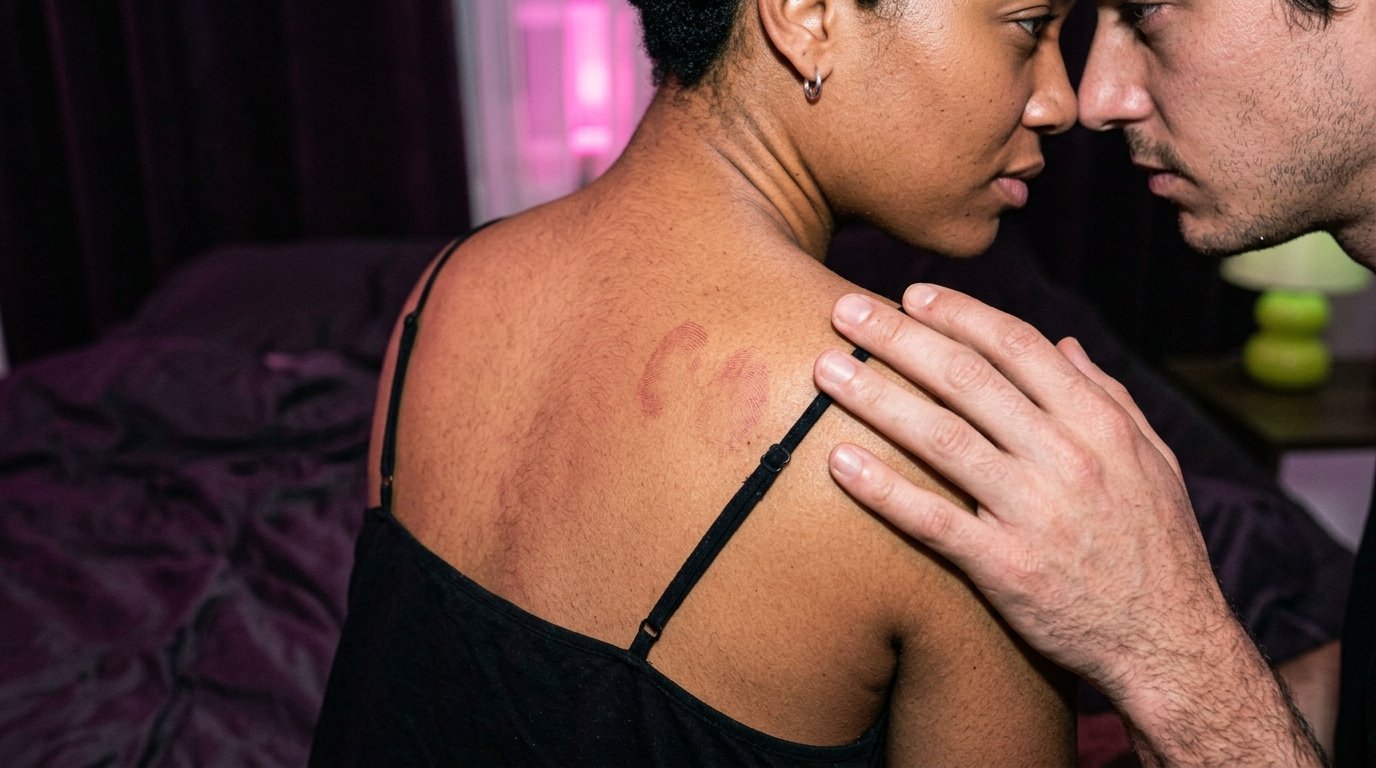
Photo: Generated by AI.
How Do You Care for Marks After Play?
Good aftercare for marks eases swelling and soreness and keeps both partners feeling cared for. Here's a simple routine:
- First 24 to 48 hours: Hold a cold pack wrapped in a cloth on fresh bruises for 10 to 15 minutes at a time to calm swelling.
- After two days: Switch to warmth, like a warm compress or bath, to help the bruise fade.
- Broken skin: Clean scratches and bites gently, keep them covered if they're open, and watch for heat, spreading redness, pus, or fever.
- Rope marks: Gentle massage and moving around usually smooth them out fast.
- Moisturize: Skin that took a beating loves a little lotion.
Most bruises go from red or purple to blue, then green, then yellowish brown before disappearing over roughly two weeks. A bruise that keeps growing, a hard lump under the skin, or numbness that doesn't go away is a reason to see a doctor.
Emotional aftercare matters just as much. Some kinksters love a next-day "mark check" with their partner. Others feel a little sad when a favorite bruise fades. Both are normal. Our guide to BDSM aftercare beyond the basics has more ideas for winding down together.
How to Hide Marks From Sex (When You Need To)
The easiest way to hide marks is to place them where clothes already cover. Agree on "swimsuit zones" during negotiation, and you'll rarely need cover-up tricks. When a mark does wander into view, try these:
- Clothing: Collared shirts, scarves, turtlenecks, and leaving your hair down handle most neck and shoulder hickeys.
- Color-correcting concealer: Green cancels out red, yellow tones down purple, and peach or orange hides blue. Dab foundation on top and blend.
- Timing: Plan heavier marking for the start of a long weekend, not the night before a big meeting.
Skip the internet hacks involving coins, combs, or scrubbing. They can irritate skin and make a bruise look worse. And never put makeup on broken skin.
Connect With Kinksters Who Love Leaving Marks
Marking is way more fun with someone who's into the same kind of trace. Chat with a few kinksters first to compare limits, favorite spots, and what "marked up" means to them. That way your first marking scene starts with someone who already gets it.
Here's how to start:
- Chat with local kinksters and find people who love giving or wearing marks.
- Drop into the FET Forum to ask questions, swap bruise-care tips, or show off your favorite rope patterns.
- Join FET to start connecting with the community before you leave your first bite.
New to all of this? The BDSM Training School covers the basics of consent, negotiation, and safer play. Want to read more? How to communicate your BDSM limits is a quick read that'll make your next marking talk a lot easier.
Marking Kink FAQ
What is a marking kink?
A marking kink is a desire to leave or receive visible marks during consensual sex or BDSM, like hickeys, bites, bruises, scratches, or rope lines. For many, the mark is a reminder of the scene or a symbol of connection.
How long do hickeys and bruises last?
Most hickeys fade in about 5 days to 2 weeks. Impact bruises usually take one to two weeks, depending on how deep they are and how easily you bruise.
Is it normal to want to be marked?
Yes. Lots of people enjoy wearing a partner's marks. As long as it's consensual and you feel good about it, it's a healthy part of kink exploration.
Can marking be part of a D/s dynamic?
Absolutely. Many Dominants and submissives use marks as a sign of ownership or devotion. Talk about what the marks mean to each of you so the symbolism lands the same way.
Is marking kink OK for BDSM beginners?
Yes, if you start gently. Lipstick, light scratches, or a soft hickey in a hidden spot are easy first steps before you try bruising impact play.
YOU MAY ALSO LIKE
Similar discussions
-
- 48 replies
- 353 views
-

- To****
-
- 27 replies
- 444 views
-

- Ja****
-
- 4 replies
- 730 views
-

- de****
-
- 32 replies
- 1,404 views
-

- ED****
-
- 4 replies
- 772 views

Join the conversation
You can post now and register later. If you have an account, sign in now to post with your account.
There are no comments to display.