CNC, or consensual non-consent, is a negotiated BDSM fantasy involving simulated force, resistance, or loss of control, acted out between adults who have fully agreed to the scenario in advance. The "non-consent" lives inside the roleplay, not outside it. Curious how it actually works and how to do it right? Keep reading.
Maybe you found it buried in a private search. Maybe it shows up in your head during sex, and you've never told a soul. Maybe you're just curious what the whole thing actually means. Whatever brought you here, good news: you're in the right place.
What is CNC?
CNC is one of the most commonly reported sexual fantasies across all genders, even if most people who have it never knew it had a name. A peer-reviewed systematic review published in PMC found that 69% of the general population has had fantasies about BDSM-related activities, including power, control, and forced scenarios. A separate PMC study on BDSM prevalence and practice confirmed that BDSM interest and fantasies are consistently more common than people assume, and significantly more prevalent than actual practice. Those studies predate the term CNC as a community label, but they're measuring the same thing.
Most people have had this fantasy. It doesn't say anything dark about you. It says you're human.
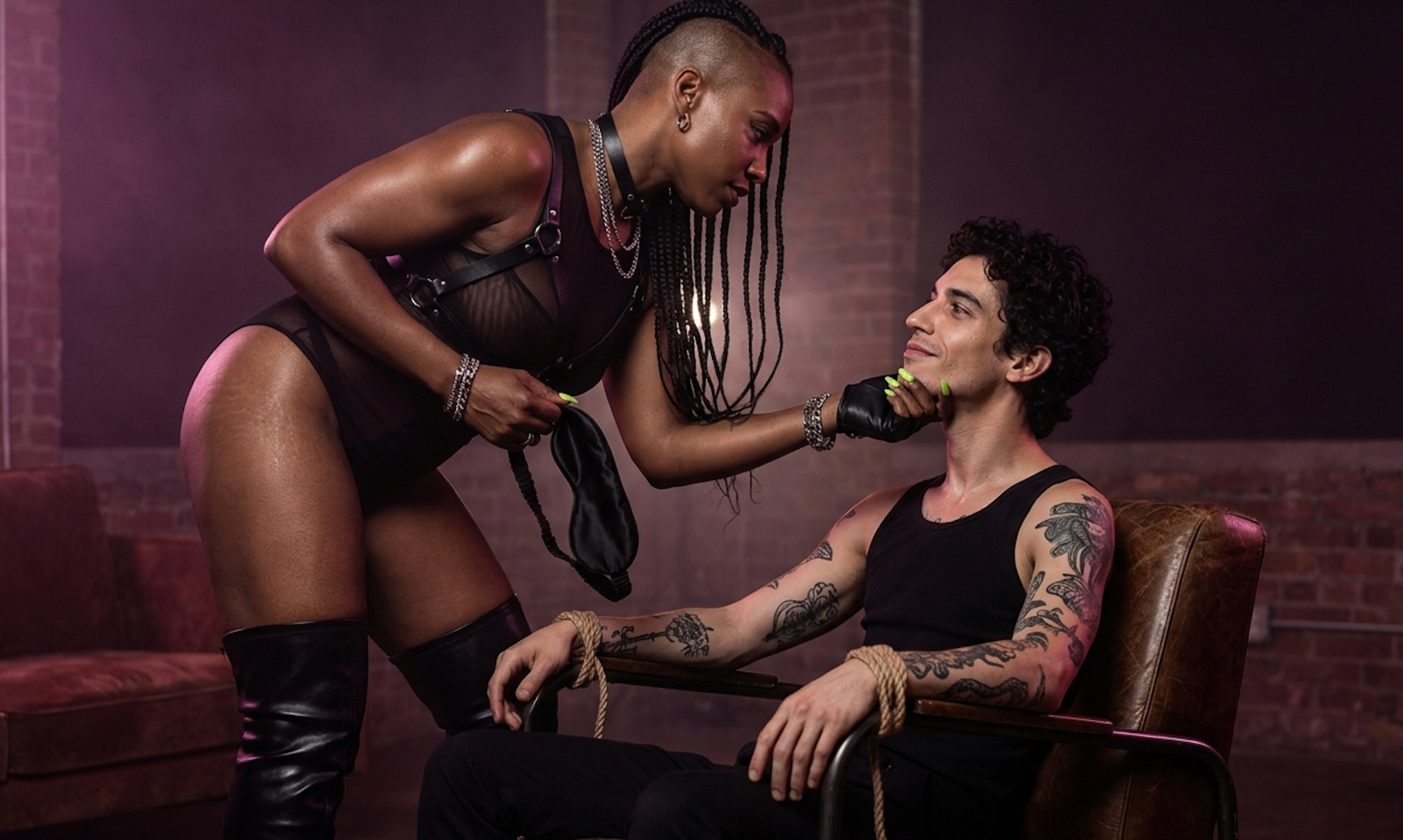
Why Do People Have CNC Fantasies?
CNC fantasies show up for lots of different reasons, and no two people's version of this kink looks the same. Here are some of the most common ones.
Erotic surrender. For a lot of people, the appeal comes down to one thing: letting go. Giving up control inside a safe, negotiated scenario can feel intensely freeing. You get to be "taken" without carrying the weight of choosing it. That shift in mental state is powerful on its own.
"I'm a pretty high-functioning person. I run a team, and I manage everything at home. CNC lets me completely switch that off. For an hour, I don't have to decide anything. It's the only time my brain actually goes quiet." Maya, 34, FET member
Taboo arousal. Desire often gravitates toward what feels off-limits. The gap between the fantasy scenario and everyday life creates a charge that, for many people, is genuinely erotic. The forbidden feeling is part of the point.
Power dynamics. CNC sits squarely in the world of D/s (Dominant/submissive) and power exchange. For people who already love a domination fantasy, CNC can feel like taking that dynamic to its most intense form.
Control through the "loss" of it. This surprises most people. The surrender feels completely real in the moment but the structure underneath it isn't. In CNC play, the person in the "unwilling" role is often the one holding the actual power. They set the limits, pick the safeword, and can stop the scene cold at any moment. The fantasy of losing control runs entirely on a structure they built.
"People assume the submissive is the vulnerable one in CNC. But I wrote the whole script. I set every limit. My partner can't do anything I haven't pre-approved. That level of control is actually what makes it work for me." Jordan, 29, FET member
Curiosity about intensity. Some people just want to explore the deep end. CNC lets you go to psychologically extreme places in a space where nothing genuinely bad is happening.
Knowing what turns you on is just that: self-awareness.
CNC vs. Real Sexual Violence
CNC involves consenting adults who've negotiated every detail of the scenario before anything starts. Real sexual violence involves no consent whatsoever. The kink community isn't practicing for assault. If anything, experienced CNC players tend to have some of the most thorough consent conversations in any sexual context. The whole framework of safewords, limits, aftercare, and pre-scene discussion exists precisely because these players take consent seriously.
The Fifty Shades of Grey fantasy fail problem is real here. Pop culture loves the idea that "real" chemistry means skipping the negotiation, or that dark desire is an excuse to ditch safewords. That's a myth. In CNC play, it's a dangerous one. The hotter the scene, the more important the pre-scene conversation.

How to Explore CNC Safely
CNC is one of the more advanced forms of BDSM play. That doesn't mean it's out of reach, but the groundwork matters. Here's where to start.
Start with Education
Before any scene, both people should have a solid understanding of what CNC actually involves. Reading about forced sex play and extreme BDSM fantasy is a good starting point. Taking the FET BDSM Test helps you get clear on where your own preferences sit before you start having those conversations with a partner.
Knowing where you sit on the D/s spectrum helps you figure out which role fits you in a CNC scenario and gives you the language to talk about it with a partner before anything starts.
Find the Right Partner
CNC play needs real trust, and real trust takes time. For most people, this isn't a first-session activity. The person playing the "aggressor" needs to know your body language, understand how you actually respond under intensity, and be someone you genuinely trust. A stranger who seems enthusiastic isn't enough.
"My partner and I had been doing D/s for almost a year before we tried CNC. The negotiation took two sessions. I'm so glad we didn't rush it. The scene was intense in ways I hadn't expected, and I needed to know I could trust him completely." Sam, 31, FET member
FET is where kinksters who already speak this language connect. You can find people with real CNC experience who negotiate openly and know what aftercare means. Join FET and start exploring profiles and community spaces to find the right match.
Talk Before You Play
Negotiation is where the whole scene gets built. Everything that could happen needs to be discussed, agreed to, and understood before the roleplay begins. That includes:
- What the scenario will look like: setting, roles, tone, pacing
- What actions are on the table, and what's a hard limit
- Whether specific words or phrases are part of the scene or carry real meaning
- What safewords or signals will you both use
- How the scene ends
- What aftercare looks like for each of you
This talk is not a mood-killer. Done well, it builds trust and makes the scene better.
Safewords, Signals, and Scene Limits
In CNC play, safewords aren't optional. Because "no" and "stop" may be part of the scene, you need something that means to end everything right now without any ambiguity.
The most widely used framework is the traffic light system: Red means stop everything, scene over, no questions. Yellow means slow down or check in; something needs adjusting. Green means all good, keep going. Simple, clear, and it works even under intensity.
If the scene involves a gag, breathplay, or any situation where speaking is physically difficult, you need a physical signal agreed on beforehand. Three taps on the partner's body is a common choice. Holding an object like a ball or a cloth that can be dropped works too.
Hard Limits vs. Soft Limits
|
Hard Limit |
Soft Limit |
|
|
What it means |
Completely off the table, no exceptions |
Uncertain or only okay in specific conditions |
|
Can it change? |
Only outside a scene, never during |
Can be revisited with time and trust |
|
Example |
No choking, ever |
Light restraint, maybe, depending on the day |
|
How to handle it |
Non-negotiable. Respect it always. |
Discuss openly. Never assume. |
Clear limits protect both players. The person in the submissive role stays safe from acts they didn't agree to. The person in the Dominant role stays safe from accidentally crossing a line they didn't know existed.
Aftercare After a CNC Scene
Aftercare matters after any intense BDSM scene, and CNC is genuinely intense. Both players may feel a significant emotional shift once the roleplay ends, and that's completely normal.
Sub drop is well known in the kink community. The submissive partner may feel suddenly vulnerable, emotional, or flat once the adrenaline fades. It doesn't mean something went wrong. It's the body recalibrating after an intense experience.
Dom drop is just as real. The Dominant partner can also crash emotionally after holding the energy of a scene, especially one as charged as CNC. Aftercare isn't only for the submissive role; both partners need it.
"The first time we did CNC, I cried after, and I wasn't even sure why. My partner just held me and didn't ask questions. We'd talked about aftercare beforehand, so he knew exactly what I needed." Riley, 26, FET member
What good aftercare looks like is different for every pair. Some people want warmth and physical closeness. Others need quiet time alone. Some want snacks and something funny on TV. Others want to talk through the scene right away. Talk about it before, not when you're both still coming down.
Check in the following day too. Post-scene emotions can shift overnight. A check-in the next morning is just good kink.
Find Partners Who Get It on FET
CNC is a niche, but the community is bigger than most people expect. What matters is finding partners who already understand how this works, people who negotiate naturally, use safewords without being asked, and have thought about what they want from this kind of play.
Join FET and build a profile that's honest about your interests. You don't need to lead with CNC from day one, but being clear about power exchange and BDSM play attracts people who already speak the language.
Try BDSM Chat and connect with kinksters who are active right now. It's a low-pressure way to start real conversations, get a feel for compatibility, and figure out who actually gets what you're looking for.
Visit the FET Forum and dig into threads about CNC, negotiation, and power exchange from people with years of real experience. You'll learn more in an afternoon of reading community discussions than most guides can give you.
Create your FET Profile and join one of the largest kink communities in the world. Over 2 million members are here. Your people are too.
You're not looking for someone who nods along politely. You're looking for someone who gets excited by the negotiation, knows their aftercare, and has thought about this stuff as much as you have. They're on FET.
Sign up for free and start where you are. Keep it safe. Keep it FET.
Frequently Asked Questions
Is CNC normal?
Yes. It's one of the most commonly reported sexual fantasies across all genders. You're in good company.
Is CNC safe?
With the right preparation, partner, and clear communication, yes. Without those things, it carries real risks. It's generally not a first-scene activity.
How do I find a CNC partner?
Join FET, be honest about your interests in your profile, and use BDSM Chat and the Forum to connect with experienced kinksters who already understand power exchange and negotiation.
Can women be into CNC?
Yes, and research shows it's especially common among women; studies suggest between 31% and 57% have had this fantasy. It has nothing to do with wanting real assault.
What's the difference between CNC and a domination fantasy?
A domination fantasy centers on control and authority. CNC specifically involves simulating non-consent as part of the scenario. It's a more intense subset of D/s and power exchange play.
-
 2
2
YOU MAY ALSO LIKE
Similar discussions
-
- 17 replies
- 65 views
-

- BlueGrace
-
- 9 replies
- 42 views
-

- Sl****
-
- 4 replies
- 43 views
-

- Deleted Member
-
- 20 replies
- 56 views
-

- ak****
-
- 36 replies
- 1,668 views
-

- sl****
Join the conversation
You can post now and register later. If you have an account, sign in now to post with your account.
There are no comments to display.