
Website Logo

You’re Kinky In A Vanilla Relationship | How To Talk About It

When it comes to sex and relationships, there’s little that’s scarier than thinking your partner will reject you. You’re emotionally invested and want to make it work, and it can feel like any small oddity, or quirky behaviour could spell the end. Writer Kayla Lords explores why realizing you’re kinky in a vanilla relationship can seem catastrophic. 


Will they freak out or kink out?

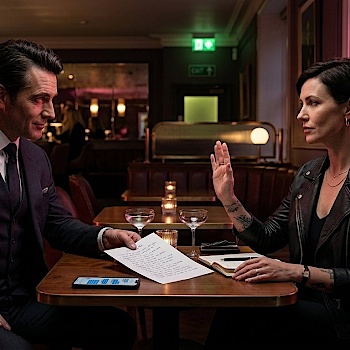
Will they think you’re a freak? Will they hate you? Will they back away in disgust and never speak to you again? Will this wonderful but vanilla relationship end in ruin, and you’ll be all alone? Most of the time, your partner will do none of those things, especially if you’re in a healthy relationship. It’s time to back away from the edge and realize that being kinky in a vanilla relationship isn’t the end of the world. You may find some sexy and kinky common ground with your partner.


sign up banner fetish.com


Adding a level of kink to a vanilla relationship

When I first figured out I was kinky, I felt different from the ‘vanilla me’. I worried and assumed that people could tell I was different like there was a stamp on my forehead. I walked around on eggshells hoping my kink didn’t show. You might feel the same way, too, and if you’re unsure how your partner will handle it, it can be even more nerve-wracking.

You don’t have to blurt out “I’m a kinky fucker who wants to be spanked until I cry, bound in plastic wrap, and edged!” I mean, you can, but it’s not a requirement. Instead, start small with a single kinky fantasy. If you’ve got a hint that your partner might be interested in adding some level of kink to your vanilla relationships - like spanking or handcuffs or a bit of power - share a fantasy you think they might like. See how they handle that revelation. If they don’t run screaming from the room (and I’m fairly certain they won’t), share the next fantasy.

 

S_74_380x640-min.png


Chatting with your partner about adding kink to your vanilla relationship might not be as scary as you think!
 

Explain what you mean by 'kinky'

Telling a partner that you’re “kinky” leaves a lot of room for interpretation. Depending on what they believe kink to be, they might get a picture in their head that’s wildly different than what you actually want. It’s best to be straightforward and have the “I’m kinky, and this is what I like” conversation.

Are you sexually submissive who wants a partner to control your orgasms and have their way with you? Would you like to tie up a willing partner and do sexy, fun things to them? What does “kinky” mean to you? That’s where you can start the conversation. To a vanilla partner, I might say, “I’m a submissive woman who likes a partner to take control in the bedroom. I also enjoy some impact play and ***.” Once that’s out, then we can talk about what it means.


Start slow and keep talking

Your partner might hear “submissive”, “Dominant” or “bondage” and think you’re ready to start a BDSM scene right away. Make it clear to your partner that, assuming they’re interested, you can move as slow as needed until everyone is comfortable. It’s equally possible your partner is secretly kinky and might be ready to take your vanilla relationship to a kinkier level. You still need to go slow.

Make sure both of you understand what the other is interested in. For a genuinely vanilla person, they may need to learn about certain kinks or how to do them. They will need time to process what you’ve told them and decide how they feel about it. Be prepared for questions, and remember t’s okay if you don’t have all the answers. Share the resources you use to understand your kinks and what it all means to you. Help them learn but don’t pressure them to make a decision.

 

M_2_640x380-min.png


Watch a kinky film together if you want to show what you need in your vanilla relationship.


Focus on the fun

If your partner is curious and interested in exploring adding kink to your vanilla relationship, focus on the fun. BDSM, specifically, can be serious business with its necessary focus on safety and consent. Yes, you and your partner need to keep those things in mind. But don’t forget to focus on the fun you can have! Trying a new position, adding some light bondage to your sexual pleasure, playing with orgasms and sex in a new way is a lot of fun for people who enjoy it.

Think of everything as an experiment. Yes, you want things to go well, but part of the enjoyment is in the journey. Maybe ***d orgasms aren’t your thing, but having your partner spend so much time on your pleasure feels good. Maybe the only *** you can handle is hair pulling or light smacks on the bottom. Focus on pleasure, and you may find your partner enjoys more kink than you originally thought.


There are no guarantees

“When a relationship is good, and you care about the person, you want everything to be “perfect.” Anything that threatens your idea of perfection feels scary and out of control, which is why you worry about confessing your kinky side to a vanilla partner. There are no guarantees that your kinks will be embraced, that your every fantasy will come true, and you’ll live the kinky happily-ever-after of your dreams.”

If you remember that this is new to your partner, go slow, and find any kinks you might both enjoy, talking to your partner doesn’t have to be stressful. Healthy relationships can be as kinky or as vanilla as the people involved want. What matters most is both partners get what they need and are able to communicate openly with each other.
 

Kayla Lords is a freelance writer, sex blogger, and a masochistic babygirl living the 24/7 D/s life. 


Signup banner fetish.com


Got your own stories of coming out kinky in a vanilla relationship? Share your tips and experience in the Fetish.com forum!

BDSM forum Fetish.com

Images: via Erika Lust
Comment

Comments


    Related Discussions

    Related Discussions

    What does effective/good communication really look like

    This has become the new buzz word it seems and at first I was eager to meet it. But when I would follow up with any sort of more depth, I was constantly met with repetitive vagueness, circular conversation, or people obviously not putting the work in. To me, effective communication would be easily conveying thoughts (feelings and emotions) between two or more people. Dodging points of interest I see as ineffective communication as "I don't want to discuss that" is a better way to do it. And I'm not talking about intimate details but very very general get-to-know-you questions. This leaves me feeling this is not what they really want, for any of several reasons. So, everyone out there. What do you consider good metrics for communication and what pitfalls do you try to avoid? 53 Likes 16 Replies· 7 months ago

    Communication, Tone, and Participation

    Our online communication often says a lot about how we see ourselves and others, even when we’re not trying to make a point. In threads where people talk about people who do the initiating, for example, I tend to notice it as more than just a passing opinion. Strong assertions, broad framing, or language that sets expectations and is conveyed with strong emotion often stand out to me. It shapes how I read the conversation overall. The way initiating, responding to, rejecting, or disengaging are talked about seems to influence the tone and climate of a space. I find myself wondering whether people feel able to speak with nuance, or whether certain ways of framing these topics make some voices quieter than others. What kinds of communication make you feel comfortable sharing your perspective in a space, and what kinds make you more likely to hold back? 48 Likes 3 Replies· 10 months ago

    Looking for advice on communication (new to LS)

    Married couple recently discovered the joy of playing with others. We've had separate fun only so far but looking for more. Here's my dilemma. I (the husband) have been on this app and a few others and making introductions, etc. Not saying that for any reason other than that's kind of how we thought things would work out best. The problem is that I'll start talking with people and wife and I talk about it, etc. Nothing hidden or anything, but I cannot get her to text/communicate with people. There have been several incredible people that wanted to meet but the whole things have fallen apart because of this lack of communication. I know a lot of people are immediately DTF and that's not our style - gotta meet and see if there's a vibe. We've met some people where there was, some where there wasn't. She is putting it on me to find people, and I don't mind it at all. It's fun meeting people, and I always say she's not much of a texter/etc. I am at my wits end and need advice. She is absolutely committed to trying new things (in fact she was asking for it before I did), but I know this communication issue is causing "problems" (can't think of a word that sounds less harsh but I don't mean it to be harsh). We've talked and talked about it and I know her ideal situation is more of a long game. I know how much fun she has when she plays and we love sharing stories, but we really want to play together. Anyone have any advice? I know that once we have our first shared experience we're going to love it but I don't know how we can get to that point. And for the record, people have specifically told me that the lack of communication is the reason they've given up on us. Maybe there's an experienced couple out there who have overcome things like this? 14 Likes 14 Replies· 10 months ago

    Why communication is so important

    As a loving Daddy who has lived this way of life for several years, to me communication open and honest communication is vital in getting to know one another when you're just starting to see if you can build a connection. For me daily and regular messages, phone calls, text messages, sending pictures and videos are all important in getting to know one another and when that communication breaks down from either side means that you have failed to show that you are truly interested in forming our connection and bond. I am one who needs to have regular daily communication to know what is happening and when the other person just playing stops talking communicating whatever to me it is disrespectful and it also shows me that you are not a real person or sincere. Back when I first started out in this way of life respect and showing respect to each other was very important but nowadays it seems to get thrown out the window and that is unacceptable to me. I'm also 57 going on 58 at the end of this month and I have no time for game players people who cannot be honest about who and what they want. I know exactly what I want and I will not settle for anything less. So again it is my humble opinion that communication is absolutely required on a regular basis in order to form the connection and bond between each other. 10 Likes 2 Replies· 11 months ago

    Communication is the most intimate foreplay

    Knowing your boundaries and limitations, as well as your partners and their triggers keeps the scene safe. Watching the body language, how tense the partner is and doing regimented check ins with your sub during the scene creates a safer atmosphere. Don’t be afraid to call a stop to scene if you notice distress. As a Dom it is my responsibility to read her body, but Subs, we are not mind readers. Only you know what is in your head. You are never a failure for using a safe word or tapping out. You found your limit. You should never feel ashamed for that. What methods do you employ before, during, and after to maintain safety and trust in your partner? 40 Likes 11 Replies· about 1 year ago